
In My Sewing Box
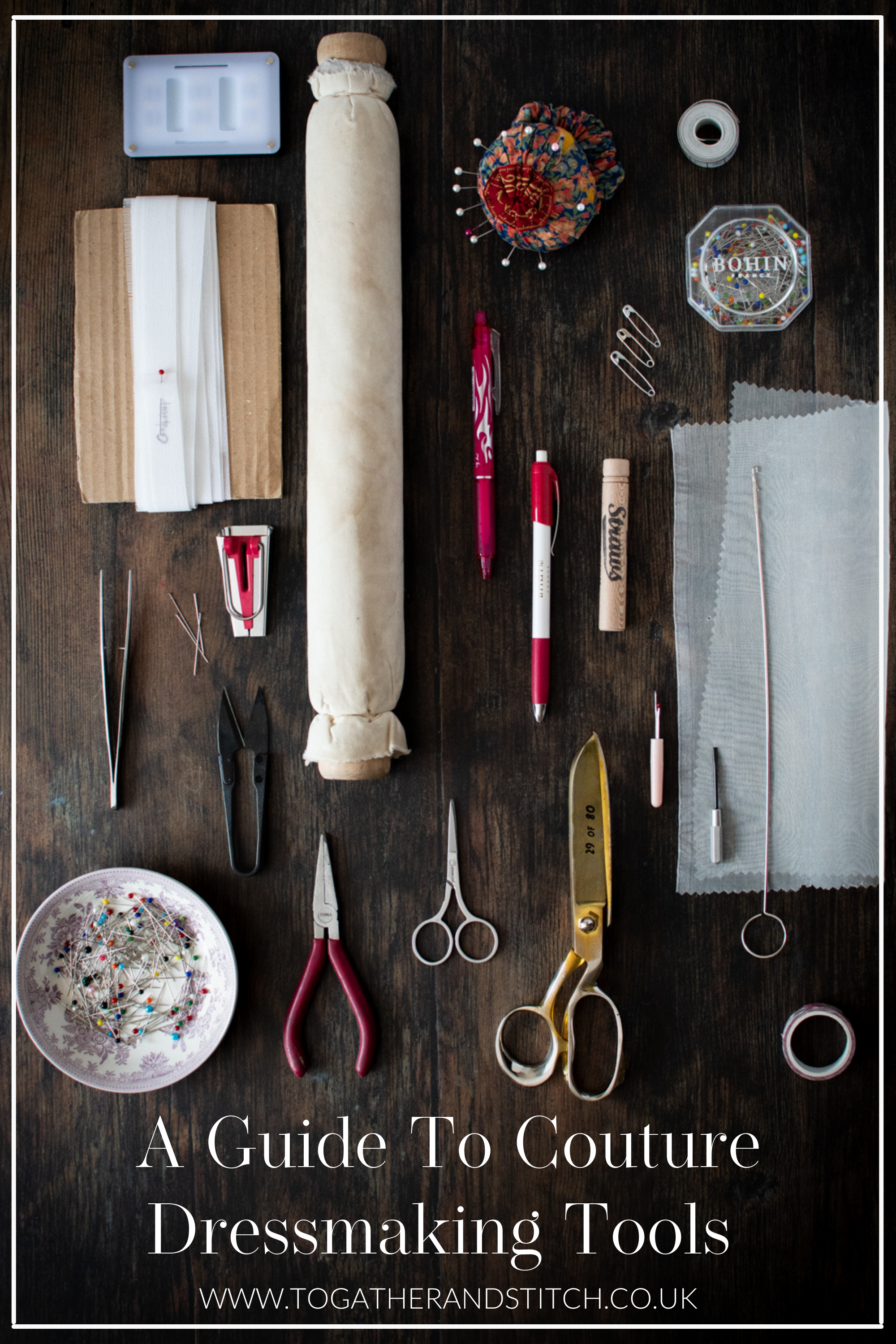
A Guide To My Most Useful Couture Dressmaking Tools and Equipment
With all the sewing accessories out there, figuring out what belongs in your dressmaking toolkit can feel like a daunting task! It’s always tempting to think that buying the next new shiny dressmaking accessory will make a difference and be the vital key to mastering couture sewing.
But where do you begin? Fear not! Allow me to offer you a glimpse into my cherished vintage red vanity case— the keeper of all the essential things in my dressmaking world. These are the precise tools that breathe life into my couture dresses!
Whilst there’s lots to choose from, these are the items I find myself reaching for every single day. These are not simply my favourites; they are game-changers, the fine sewing tools that make a difference.
So join me as we discover my must-have equipment for couture dressmaking.
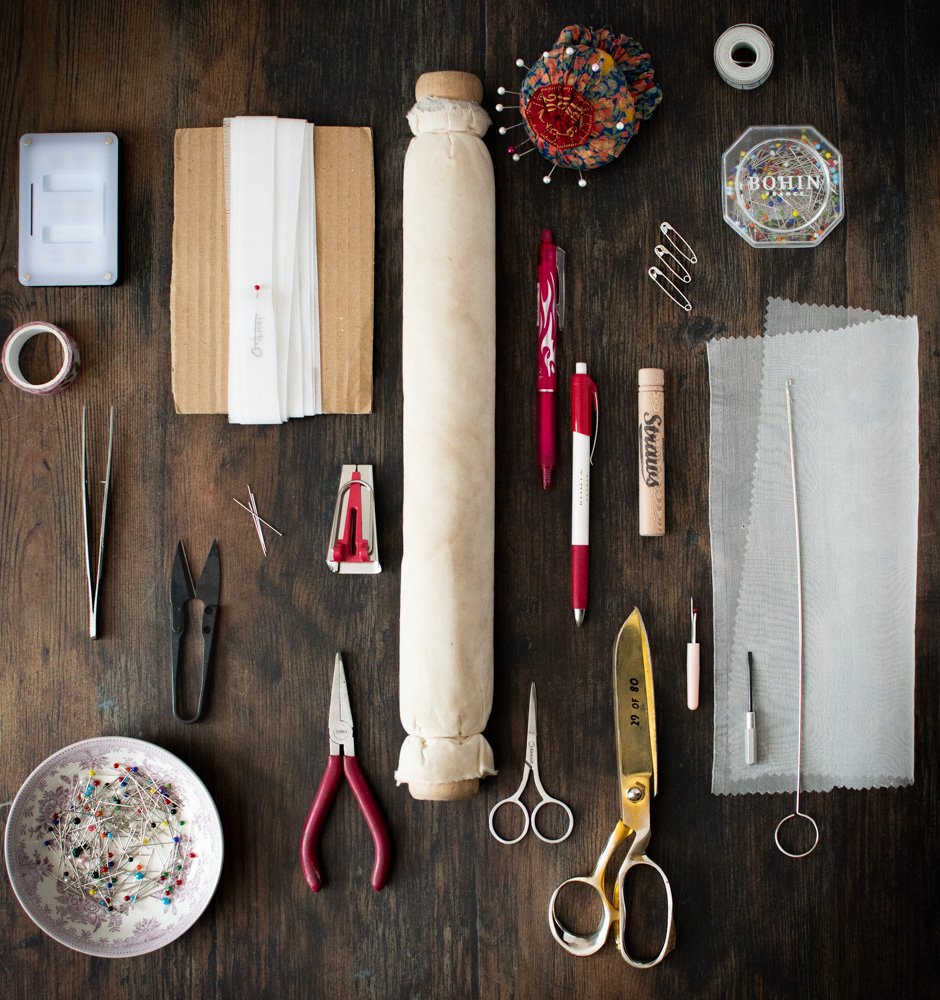
Cutting & Trimming
8” Sewing Scissors
Although I have several pairs of tailors shears I prefer these as I find them much more versatile.
Unpicker/ seam ripper
Even the most skilled dressmakers make mistakes, which is why a seam ripper is a must-have tool for every sewist. Choose one with a fine, sharp blade for effortlessly removing stitches without damaging the fabric.
Sharp pointed embroidery scissors
For clipping seams, trimming edges, grading seam allowances and cutting out lace motifs.
Thread snips
Small and handy these are good for quick and precise trimming of threads without damaging surrounding stitches or fabric. Can be used for unpicking seams too.
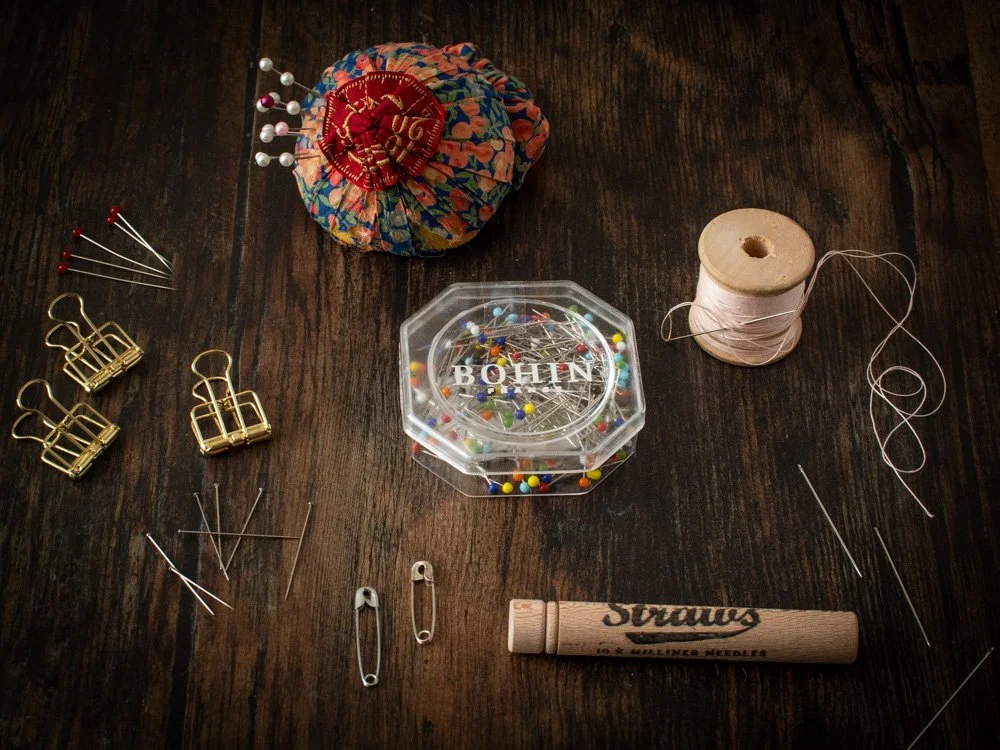
Pins & Needles
Glass-headed pins
Extra long and extra fine glass-headed pins stay in place and are less likely to damage delicate fabrics. As glass is heat resistant the heads don’t melt if they accidentally come into contact with the iron. They are brightly coloured and easy to see, so you don’t lose them in the garment and forget to remove them! And they are easy to spot and pick up if you drop them.
Steel dressmaking pins
Again extra long and extra fine - I use these for marking dart positions as I pull the pin through the pattern paper ( and you can’t do this with a pin that has a glass head).
Safety pins
Useful for fitting, securing ends of elastics before you stitch, and turning straps through to the right side. Also useful for securing appliqués as the safety pins won’t fall out.
Wrist pincushion
A handy way to store pins and keep them within reach when you are dressmaking. I find mine very useful when I am draping on a stand or fitting a garment. Mine has an elastic strap so fits my wrist and is comfortable to wear. I still use it as a pincushion even when I’m not wearing it.
Sewing machine needles
I nearly always use a sharp universal machine needle - a size 70 for delicate fabrics and a size 80 for medium-weight fabrics. I keep a pack of machine needles close to my machine and put the old ones in a glass jar.
Needles for hand stitching
Milliner’s straw needles are great for basting and slip stitching. Their length means that for basting you can easily make large stitches and sew fast, and they are easy to hold and make precise stitches for slip stitching and hemming by hand. I do nearly all my hand stitching with a size 5 milliner’s straw needle.
Other hand-stitching needles that come in handy are:
A beading needle.
A chenille needle for sewing with embroidery thread, or multiple strands of thread at once.
A bodkin for turning loops, although if I have my lop tuner to hand I’ll usually use this instead.
Measuring
Tape measure
A 150 cm flexible tape measure made from soft fibreglass with inches on one side and centimetres on the other.
Washi tape
A roll of masking tape or Washi tape is great for adding a temporary stitching guide to my sewing machine. Also useful for taping pattern pieces together.
The following are kept by my sewing table:
A Metre Ruler
A one-metre aluminium ruler bought from a hardware store, is useful for altering patterns, and for measuring hems during fittings.
Pattern Master
Perfect for drafting and altering sewing patterns, but it also has guides for every half centimetre up to 6 cm which is useful for marking hems, button placements and checking seam allowances.
Marking
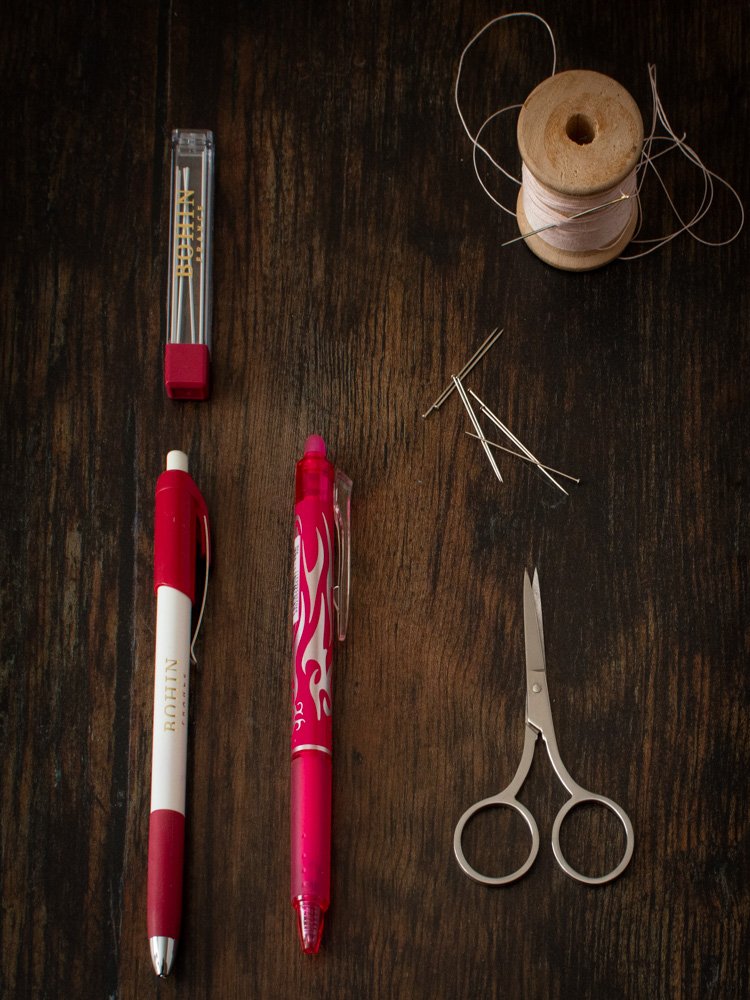
Bohin Mechanical Chalk Pencil
When I need to mark pattern lines, darts, pleats etc. on fabric the Bohin mechanical chalk pencil is simply the best. It makes fine lines that are much more precise than using a traditional tailor’s chalk. I’ve found that they rub out easily using the rubber at the end of the pencil, although I’ll always check on a scrap of the fabric first. You can also buy replacement leads too.
Frixion Pen
Again they create a fine line that can easily be removed by the heat of an iron, which isn’t a lot of use if you are ironing the garment a lot as you work. However, I get around this by marking the fabric just before I need to see the marks to sew. Bear in mind though that cold temperatures can sometimes bring the marks back. So I usually only use my beloved pink Frixion pen to make a garment on the reverse or where they will be hidden in the seam allowance.
Pressing
A well-pressed garment is the hallmark of couture craftsmanship. I press at least as much as I sew, if not more.
Rolling pin
A rolling pin covered in wadding and cotton is brilliant for pressing open seams as its curved design, ensures that pesky seam lines don't leave unwanted imprints on the opposite side.
It's also extremely practical when it comes to achieving perfectly pressed seams in hard-to-reach areas like sleeves or trouser legs.
A silk organza press cloth
Silk organza makes a great press cloth. This fabric is sheer so you can see through it to exactly the area you are working on, so there are no nasty surprises! The silk organza is a tough fabric that will withstand a lot of heat. I don’t finish the edges as they might leave an imprint on the fabric. In an ideal world, I would trim the edges with pinking shears.
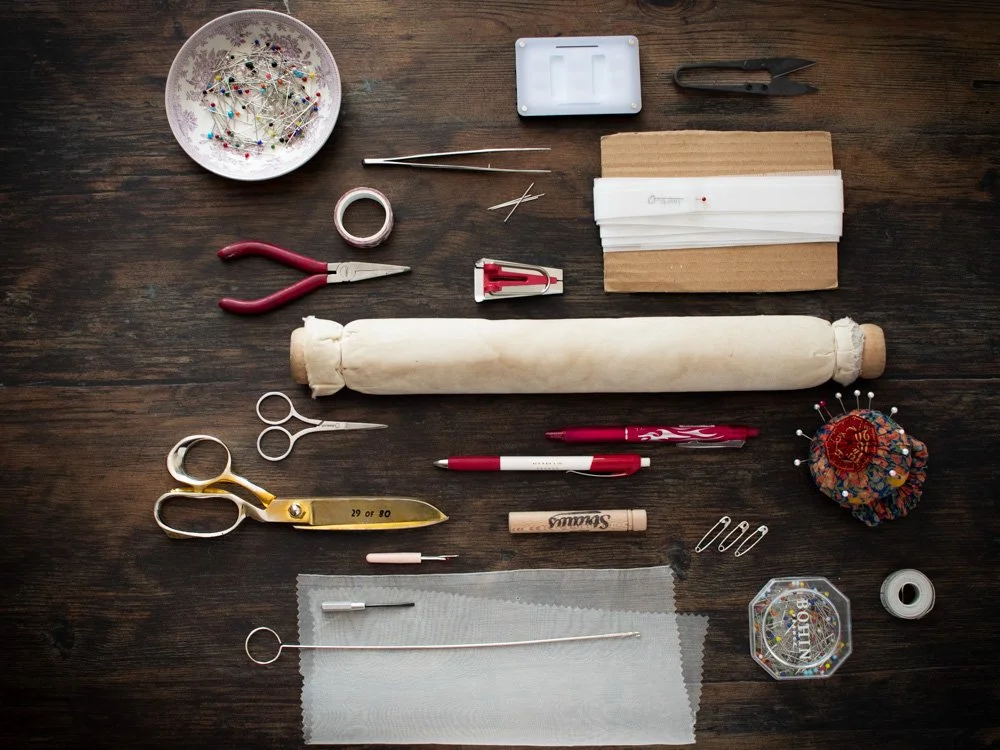
Other Tools That Make A Difference
Then there are a few extra things that make my life much easier and will accompany me along with my Treadle 66 when I find myself off-grid and on a desert island!:
Bias binding maker
This practical accessory speeds up pressing neat bias tapes for bindings.
Blunt ended pliers
I use these for crushing beads within seam allowances so that my machine needle doesn’t break.
A pair of long-armed tweezers
For removing loose threads, and for threading my overlocker.
A roll of Ban Rol tape
Originally sold as sew-in interfacing for waistbands, Ban Rol tape is a wonderful tool for creating exquisite narrow hems by machine. It’s relatively inexpensive and reusable - I have three metres prepared to different widths. (A tutorial on hemming using Ban Rol tape is coming soon).
A glasses screwdriver
Is great for adjusting the tiny screw on a bobbin case, and short enough to remove the needle plate on my machine.
A loop turner
This makes it much easier to turn through long lengths of rouleau for spaghetti straps.
A mini photography light
I love a small win - and this is one of mine! I had a couple of portable LED photography lights in my camera bag and found that I hardly used them, preferring to set up a light with an umbrella shade on a stand instead.
The beauty is that you can place the light exactly where you need it, and even on the bed of the machine. It’s a game changer on those dark winter evenings when you are trying to sew and your machine light isn’t quite bright enough.
I have this light which is lovely and bright, I also have a mini cube light which is magnetic too, perfect for securing onto my machine!

A pretty saucer to put my pins in.
I love pretty china. I’m a Staffordshire girl and a fully subscribed member of the Turnover Club! If you know, you know!
A Small Hammer
Not used for self-defence! Ideal for crushing glass beads that lie within the seam allowance on sparkly fabrics.
A bottle of Fray Check
This colourless liquid prevents the fabric from fraying and is great for reinforcing the cut edges of buttonholes, or corners of chiffon hems.
So gather together your favoured sewing tools, your needles and pins, thread your machine and begin to create beautiful clothes, one stitch at a time!

PS. I have concentrated on the contents of my sewing case.I have so much to share about sewing machines and pressing equipment that I could fill pages! I'll delve into these topics in more detail in future blog posts.
Are you on Pinterest?
If you enjoyed this post here’s. a pin to share
Related posts


