
How To Choose The Correct Pattern Size
A Step By Step Tutorial

This post is part of a series exploring how to choose the most appropriate pattern size and alter it so that you create a garment that fits and flatters you perfectly.
Remember that everybody is different, so a pattern will rarely fit nicely without any adjustments. It’s not a fault; it’s completely normal! And even if a pattern designer could spend all their time developing every possible pattern size (and that’s lots and lots of work), it’s likely that you’d still need to adjust the pattern until you’re happy.
So how do I know what size pattern to choose?
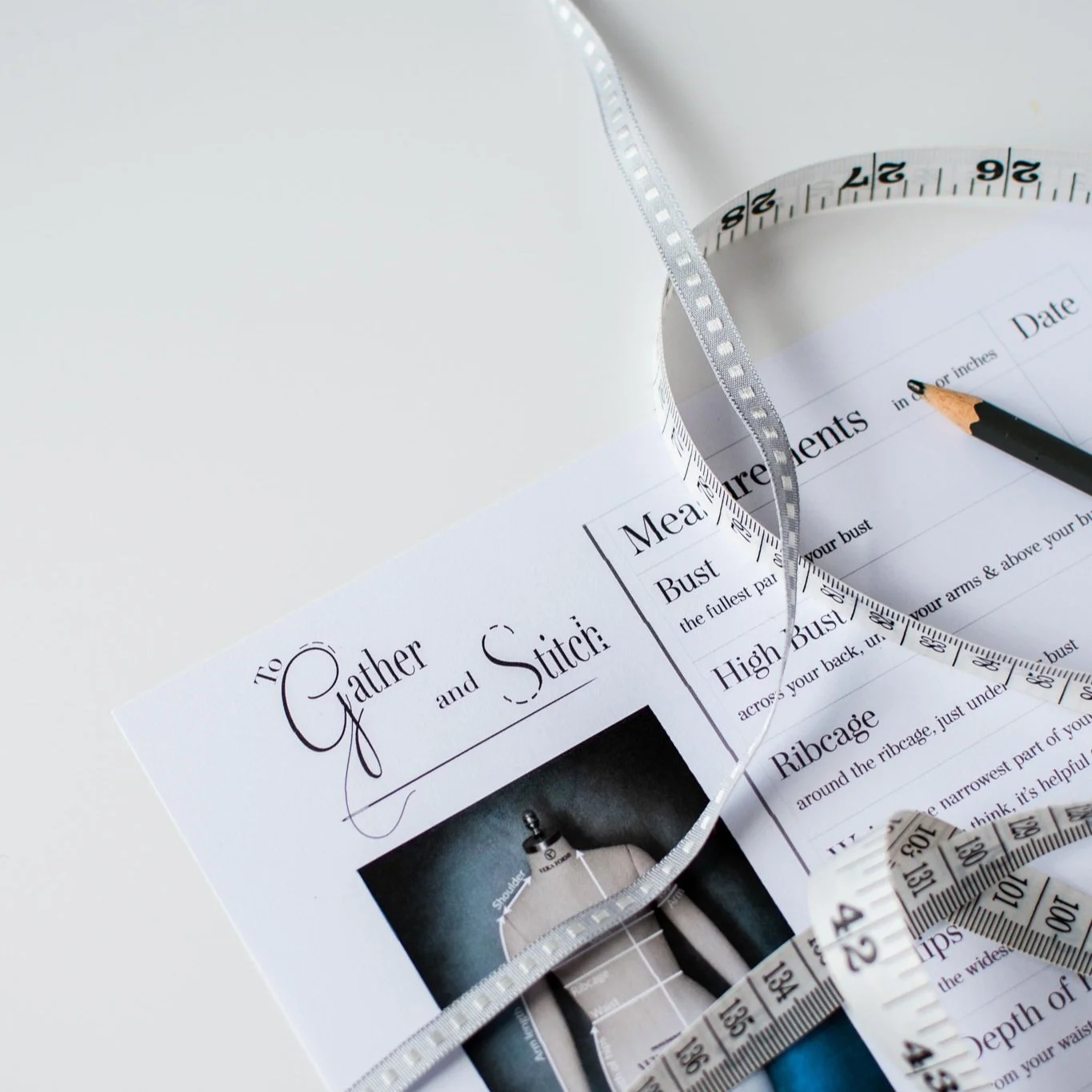
The first step is to take your body measurements. You’ll find a helpful post about this here.
For a skirt or trousers
Choose a pattern that fits your hips and adjust your waist and depth of hips to fit.
If the sewing pattern is multi-sized, you can use the waist of one size and the hip measurement of another and grade between the sizes.
I have two sizes difference between my waist and hips. My waist is a size 10, and my hips size 14 (and after a good Christmas with lots of mince pies, three sizes different, and more like a size 16!)
Bear in mind the finished garment measurements. Most patterns have wearing ease, the amount of ease needed to make sure that you can breathe, sit down and move about(usually 5cm -7.5cm in most garments). And design or style ease too, e.g. is the garment fitted or loose-fitting, etc.
It’s a good idea to make sure that you're happy with the ease amount. Use your tape measure to see if the garment measurement feels comfortable. Are you satisfied with it, or do you want to alter it?
How to choose a pattern size for a top or a blouse?
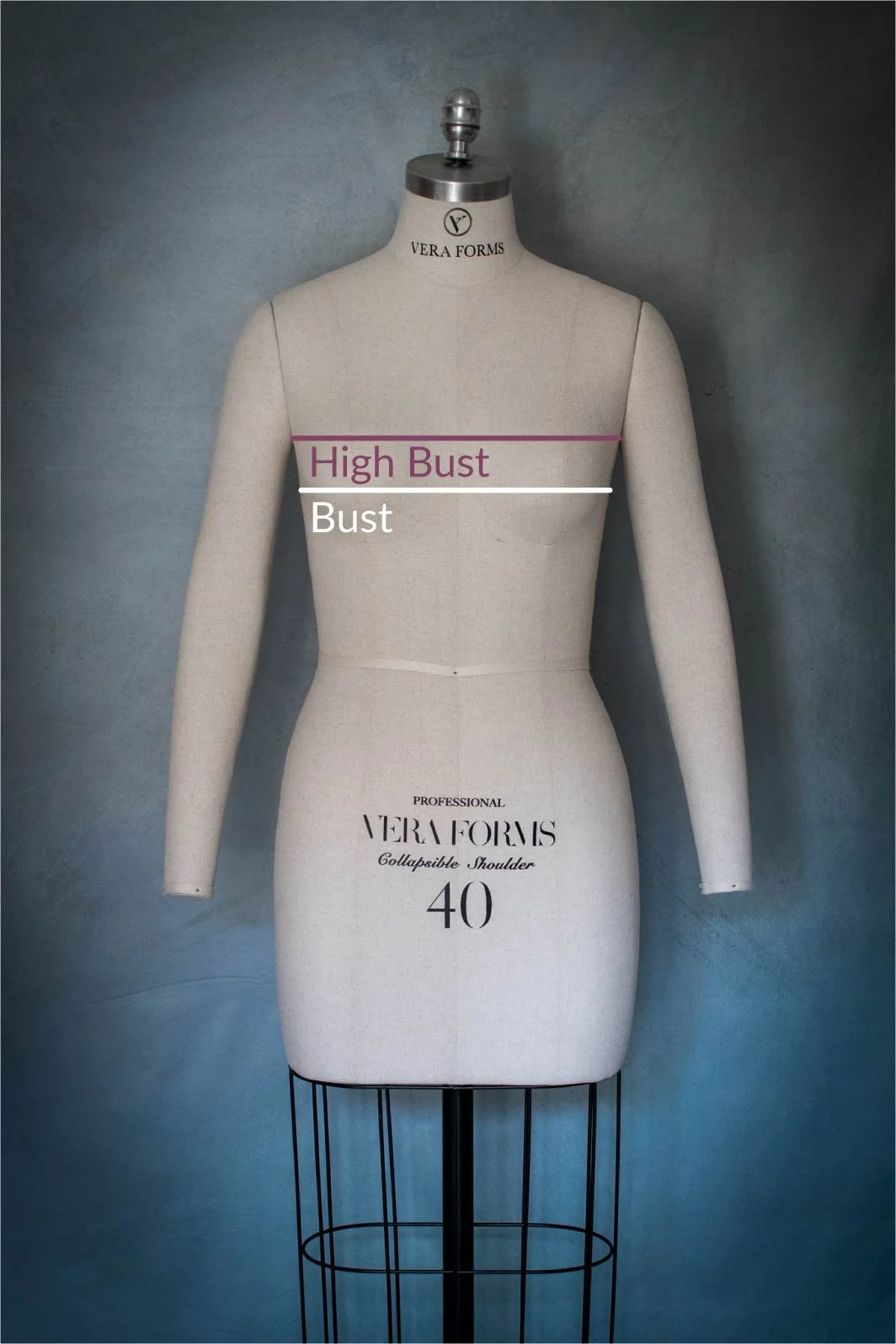
For a top or a blouse, choose a pattern that will fit your neck and shoulders. This is where your High Bust measurement comes in handy. This is a measurement across your back, under your armpits and above your bust. ( See image.)
Sewing patterns are sometimes designed with cup sizes denoted by letters, so it’s good to check what cup size patterns are drafted for.
However, it’s not the same thing as bra cup sizes! I know! (Seriously! )
Pattern cup sizes
Pattern cup sizes are determined by the difference between the High Bust measurement and Bust measurement. They are named the same, B, C, D cup etc., but the sizes are found differently:
A cup = 2.5 cm or 1 inch difference
B cup = 5 cm or 2 inch difference
C cup = 7.5 cm or 3 inch difference
D cup = 10 cm or 4 inch difference
DD cup = 12.5 cm or 5 inch differenceMost tissue paper and PDF patterns are drawn for a B cup, but some designs are drafted for a C cup and occasionally a D. Some pattern designers vary the cup sizes across the size range, so it’s always best to check.
If the difference between your measurements and the pattern cup size is only one size, i.e. an A or a C, and the garment has enough design ease, you may get away with using the B cup pattern.
If you are more than one cup size away, or the pattern is very fitted, it’s a good idea to make a Full Bust Adjustment (or a Small Bust Adjustment) which will alter the front of the garment in the bust area without changing the length of the shoulder or side seams.
A blog post on how to make a Full Bust Adjustment is coming soon.
Lingerie patterns are often designed for a range of bra cup sizes.
Bra sizes are denoted by number and letter and determined by the Ribcage ( or underbust measurement) and the bust measurement.
The number is found by measuring the Ribcage and is usually just the closest number rounded down as most bras have elastic and rows of hooks to adjust the underhand anyway.
So if your Ribcage is measured at 32 ¾ inches, your bra will be a size 32.
The cup letter is determined by how much larger the Bust measurement is over the Ribcage.
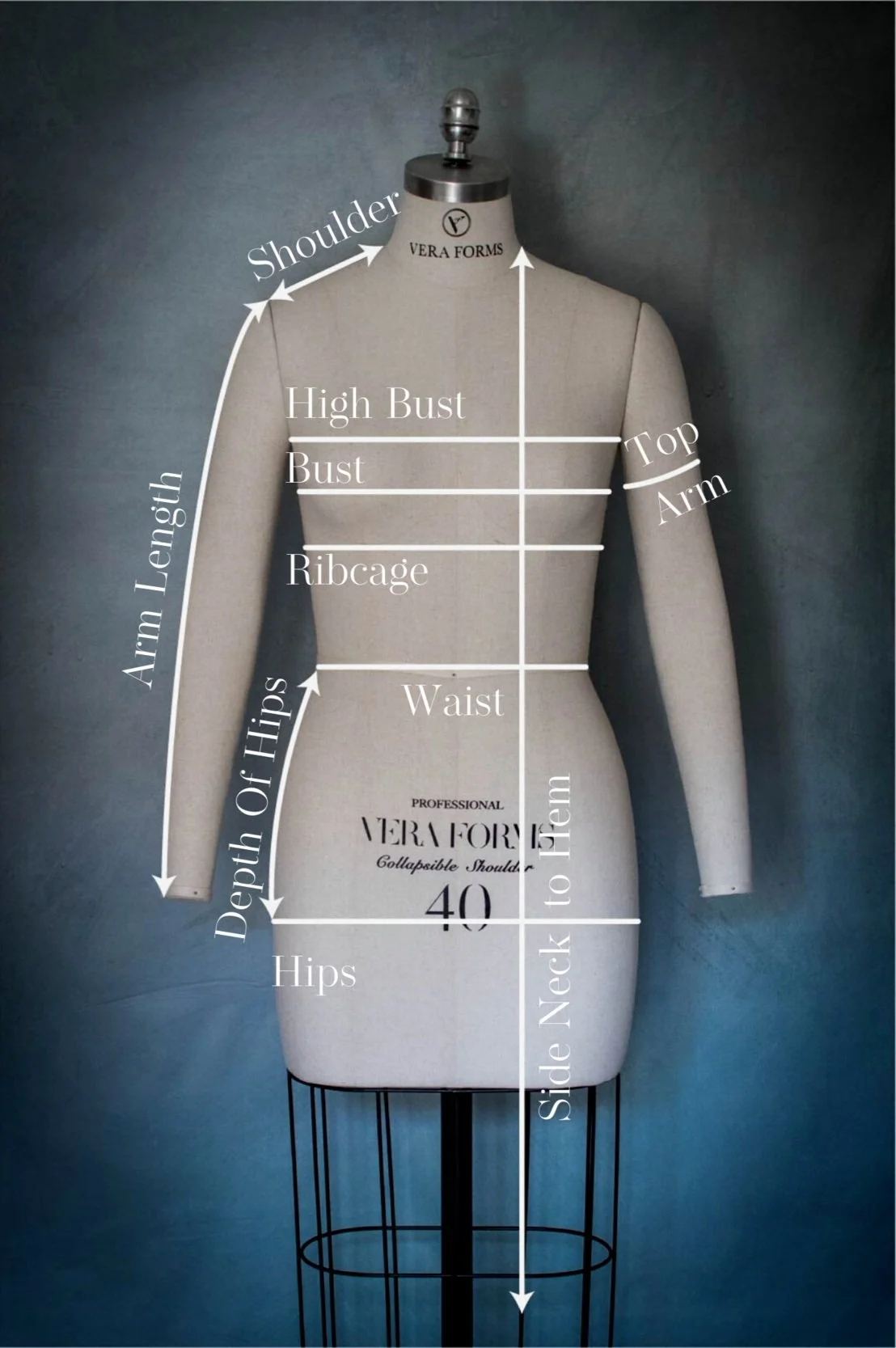
So if your Bust measurement is 34.5 inches, there are 2.5 inches difference between the two measurements. This is where the letters come in:
1 inch or 2.5 cm difference = A cup
2 inches or 5 cm difference = B cup
3 inches or 7.5 cm difference = C cup
4 inches or 10 cm difference = D cup
5 inches or 12.5 cm difference
6 inches or 15cm difference
7 inches or 17.5 cm difference
Bra fitting is always a bit of a challenge, but making one yourself allows you to create something that fits perfectly. Check your measurements and your existing bra size against the designer’s size chart and choose the size that is the nearest, and then make a toile or muslin to check the fit before you cut the pattern out in its actual fabric.
How to choose a pattern size for a dress?
Choose the pattern based on your choice for a top (see above), choose a pattern that will fit your neck and shoulders, alter the bust area with a full bust or small bust adjustment if the dress is fitted and then grade the pattern if you need different sizes in the waist and hip area.
You can find out how to grade a pattern between sizes here.
Happy sewing!

PS. If you’d like to receive more sewing hints and tips from me, don’t forget to sign up for my newsletter below.
Are you on Pinterest?
If you enjoyed this post here’s a pin to share

Related Posts


